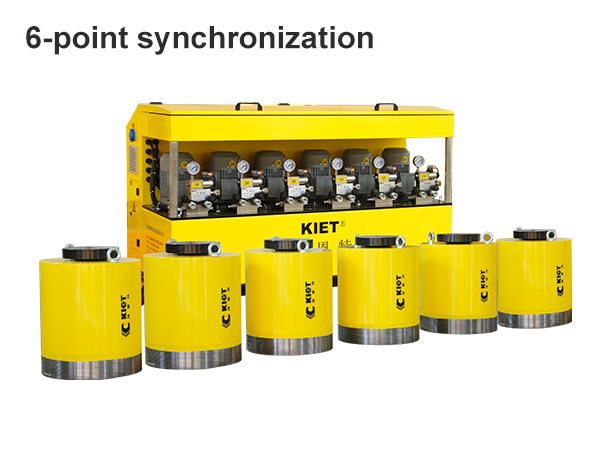
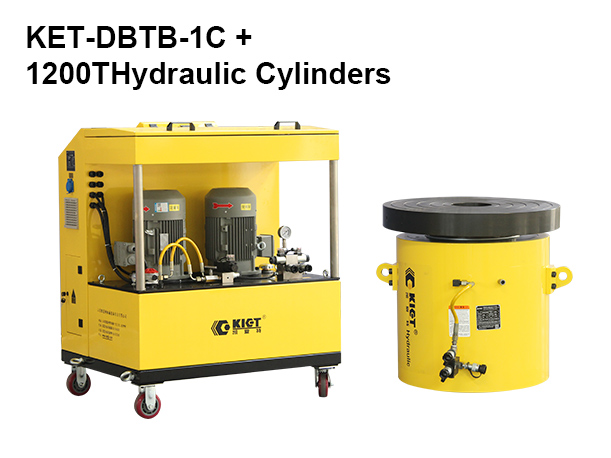
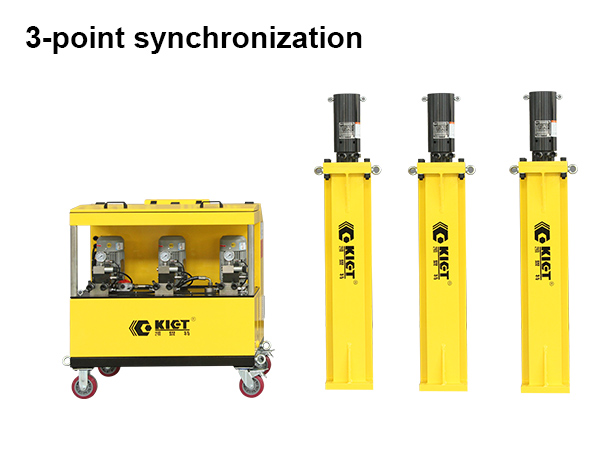
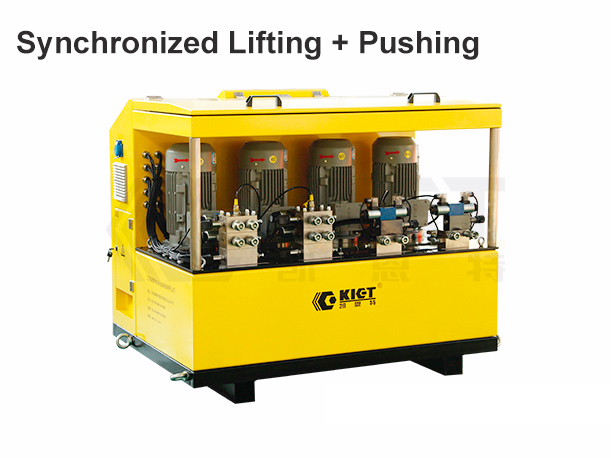
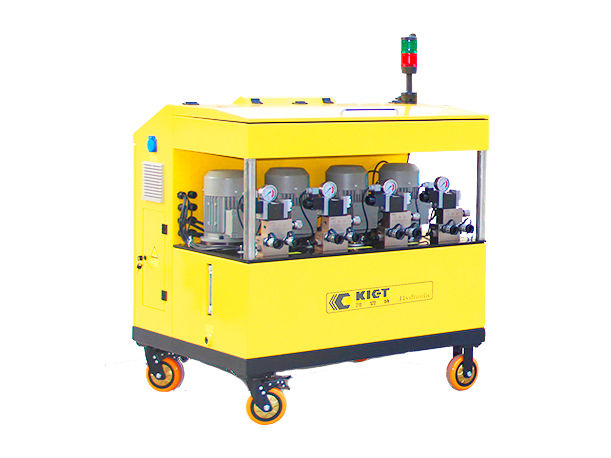
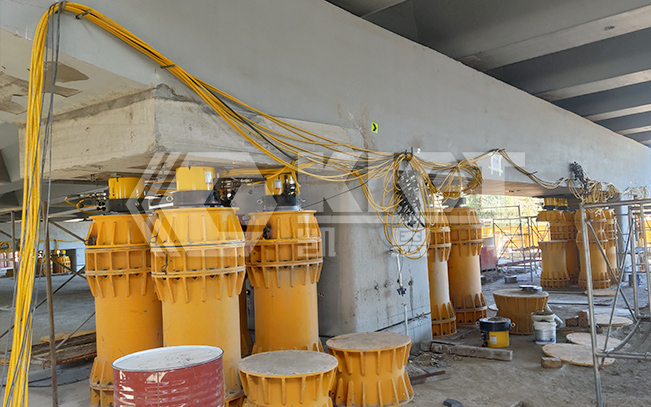
Since the bottom surface of the workpiece may not be flat, a conforming function is integrated into the system. This ensures the load is evenly distributed among the jacks and establishes a consistent starting point for synchronous operation.
Before synchronous lifting, this function is activated. The jacks will rise simultaneously, but each individual jack stops as soon as it makes contact with the workpiece. The remaining jacks continue to rise until all of them are in contact. Following this, each jack uniformly increases its pressure to approximately 5Mpa (this conforming pressure can be set on the industrial PC). The jacks then automatically stop, and this exact position is recorded as the synchronization's zero point.
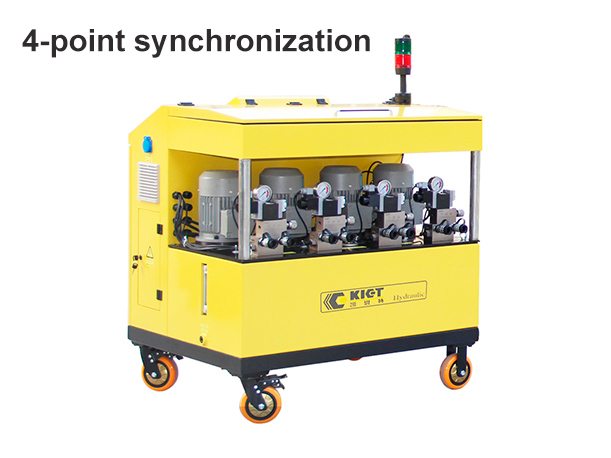
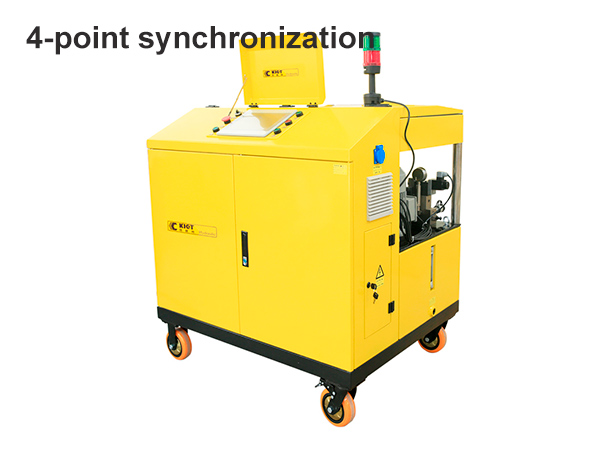
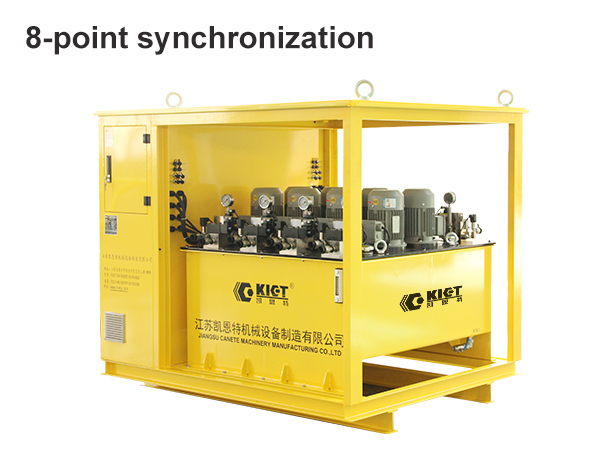
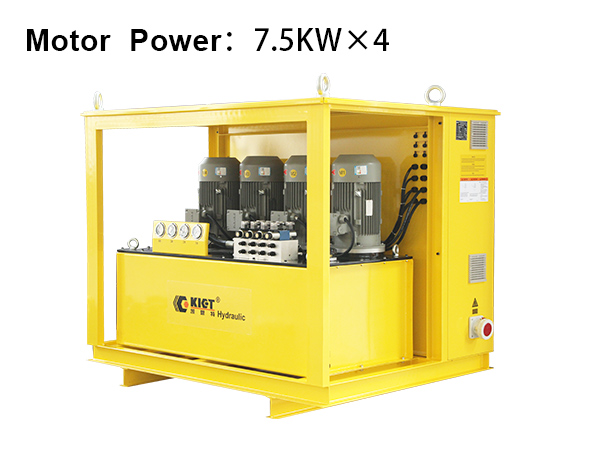
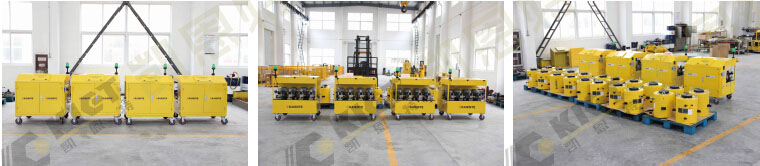
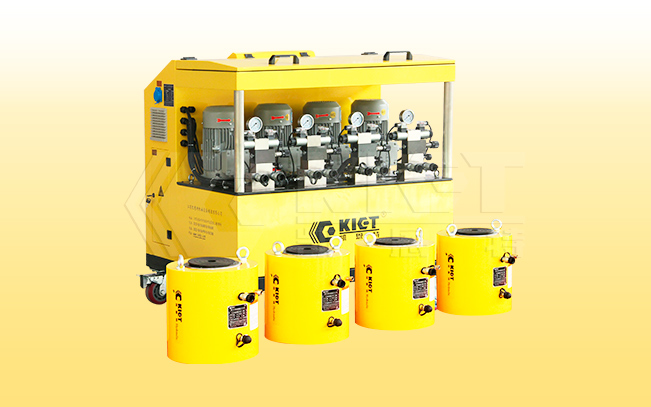
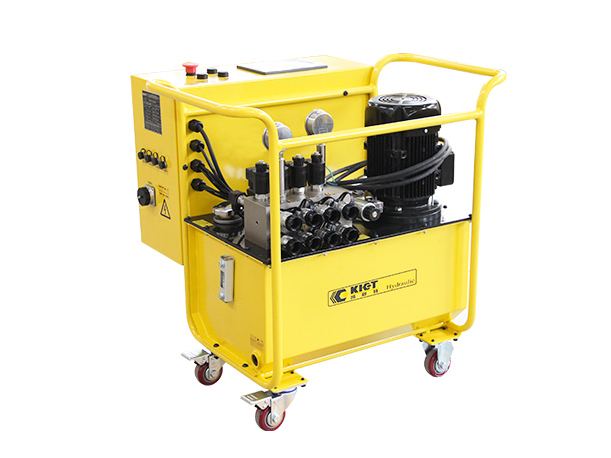
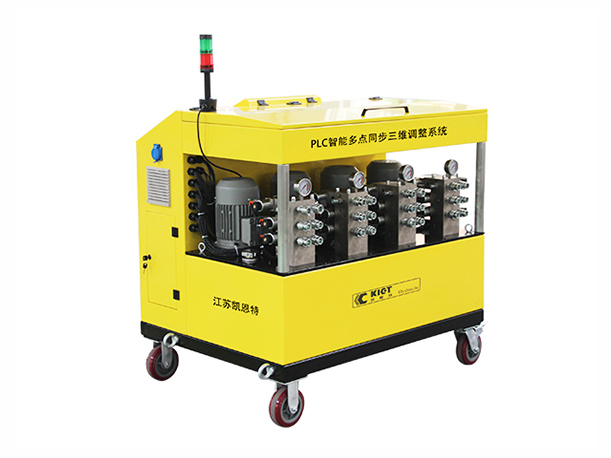
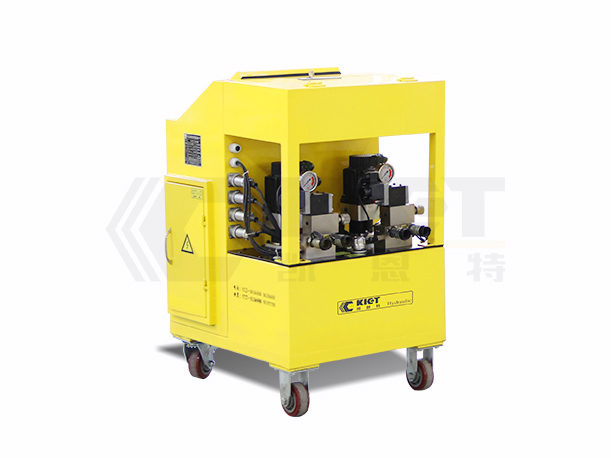
This system features four sets of displacement sensors, strategically placed at key control points. These sensors provide real-time, accurate measurements of the load on each hydraulic jack as it moves. Additionally, a balance valve is integrated to ensure the jacks operate under controlled oil flow during both lifting and lowering. This valve reliably holds pressure, preventing the workpiece from unintended descent and allowing the jacks to securely support the load even during a power outage. Our system is designed for high-tonnage, long-stroke jacks and is known for its fast lifting speed.
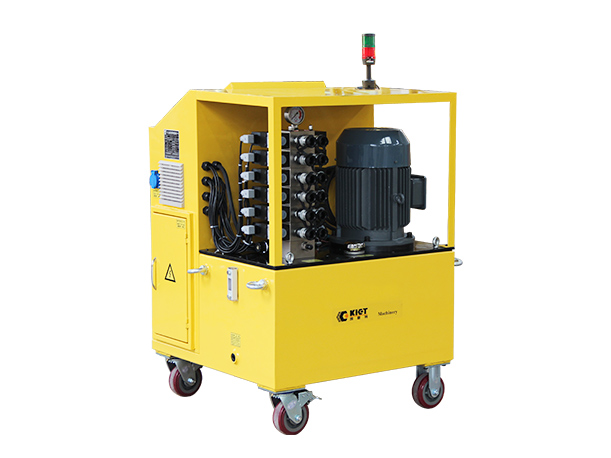
The electronic control system is the key to achieving synchronous movement. It is based on closed-loop control system theory, using the displacement signal of the moving load as the controlled parameter and the pressure signal generated within the hydraulic jack's force chamber as the reference.
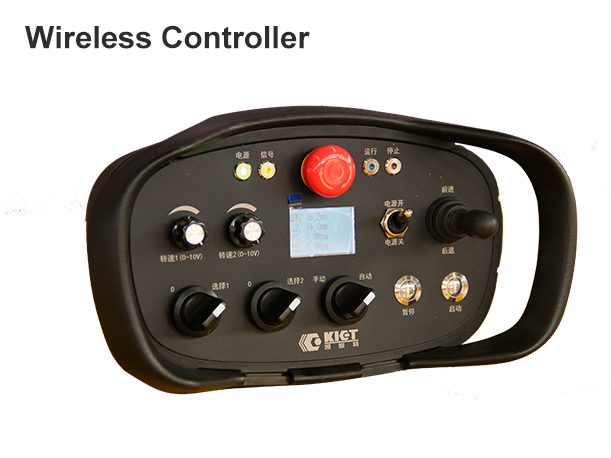
Sensors collect these signals and transmit them to the controller. The controller processes these signals, compares them to the input tolerance values, and, when a controlled point is at risk of exceeding this tolerance, sends a signal to the corresponding variable frequency drive. This shuts off the hydraulic pump, limiting the jack's upward or downward movement at that point. Similarly, when feedback indicates that a stopped point is falling behind, the controller signals the variable frequency drive to restart the hydraulic pump, allowing the jack to resume its movement.
Through these precisely controlled actions at each point, the entire system achieves a state of constant, synchronous motion.