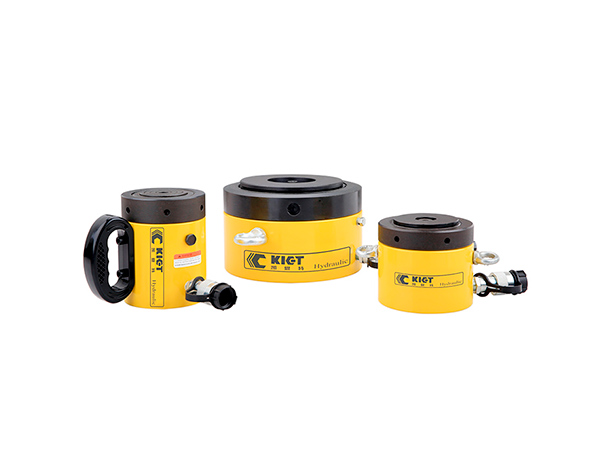
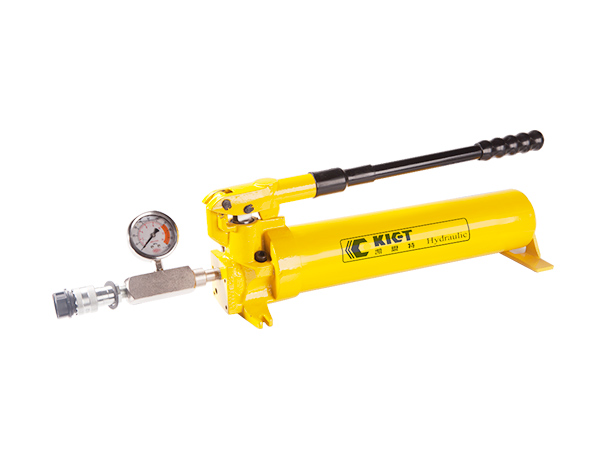
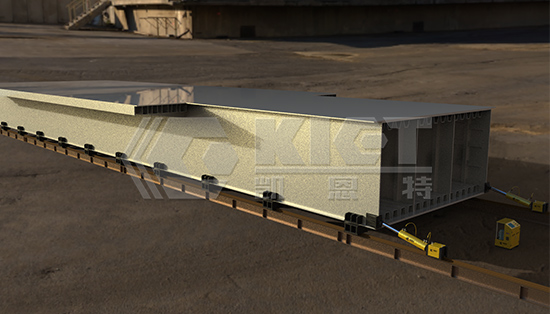
In the previous article, we introduced the lock nut cylinder one drive one connection configuration scheme: 100T single acting lock nut hydraulic cylinder with hydraulic hand pump. Sometimes, we need a hydraulic hand pump to drive two lock nut cylinders to work synchronously. This solution requires the center of gravity of the heavy object to be dispersed to two balance points with the two cylinders placed on them. Single acting design, load return, applied to the lifting operation requiring the piston to stretch for a long time to support the load. The mechanical nut bears the load and can be locked at any position of the stroke by the mechanical nut to ensure the safety of the operation.
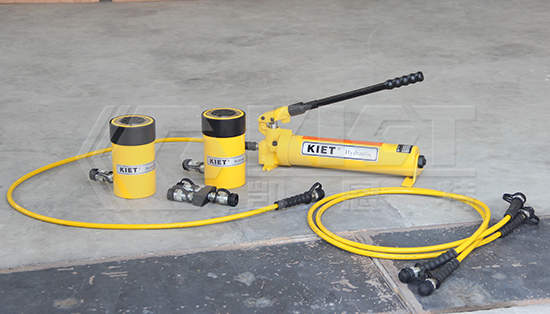
One drive two lock nut hydraulic cylinder configuration scheme:
2 units lock nut hydraulic cylinders, 1 unit hydraulic hand pump, 3pcs hydraulic hoses, 6 pairs of quick couplings, 1pc 3 ports distribution valve, 1pc pressure gauge (optional). When shipping, please specify whether the pressure gauge should be installed before shipment.
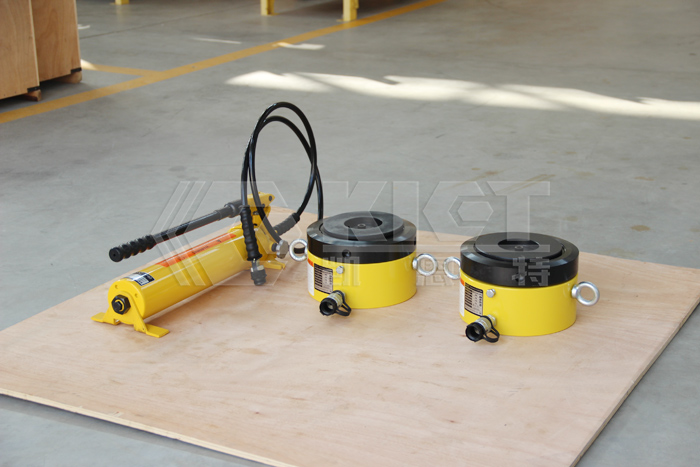
Attached are the parameters of KET-CLP-2002 lock nut hydraulic cylinder:
Capacity: 200T
Working Pressure: 70Mpa
Closed Height: 155mm
Stroke: 45mm
Effective Area: 285cm²
Choose the type of hydraulic hand pump required based on the oil capacity of the cylinder.
How to use:
Lock nut cylinders can be used for long-term support, but they are not permanent support. Please remove the cylinders in a timely manner after the project is completed.
If a regular hydraulic cylinder is used, it cannot be used for long-term support. Make sure that the center of gravity of the heavy object is on the same vertical line as the top of the hydraulic cylinder and that the base of the cylinder is on a solid and anti-slip surface.
When two hydraulic cylinder are lifted simultaneously, they should be spread out along both sides of the center of gravity and the centers of both ends should be in a straight line with the center of the heavy object. When multiple cylinders are lifted simultaneously, it is sufficient to evenly distribute the weight across all the vertices. Ensure that the lifting process is smooth and steady, with a consistent speed and synchronous lifting and lowering.
During the pressure test, personnel are requested to stay away from the joint part to prevent injury from splashing hydraulic oil.