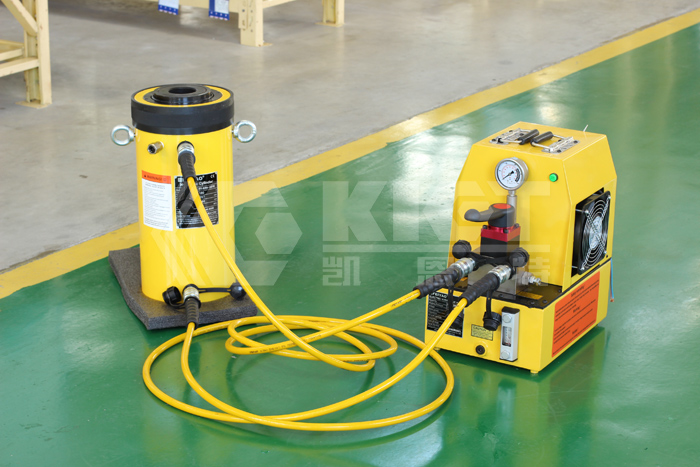
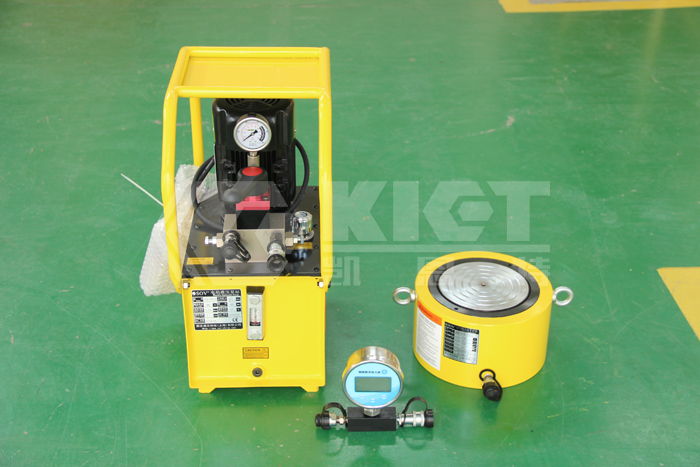
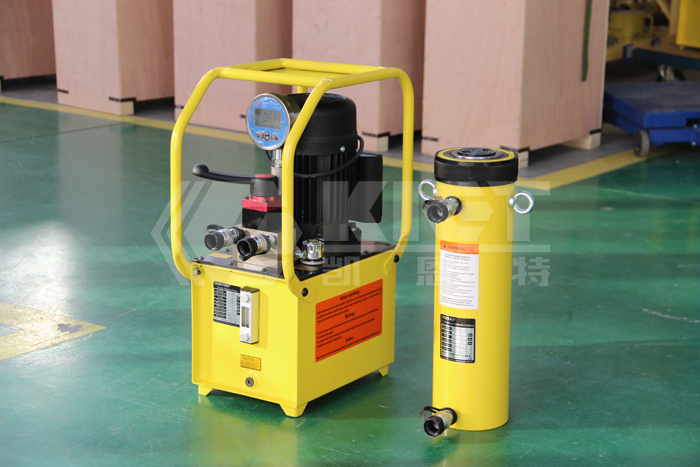
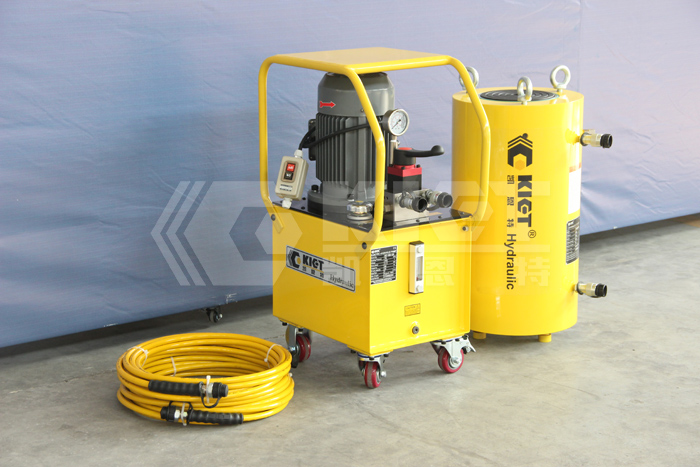
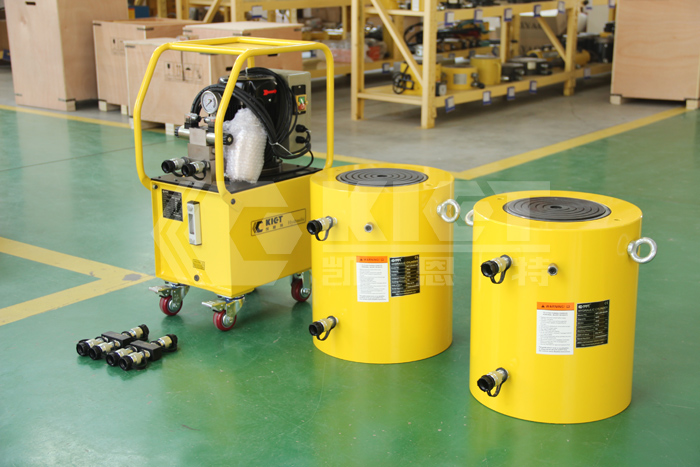
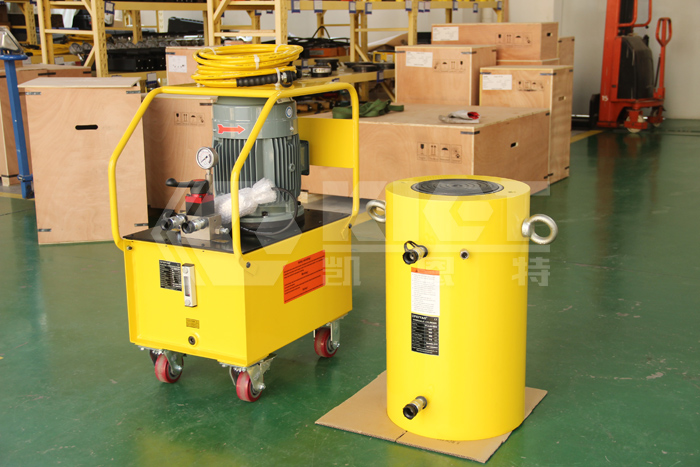
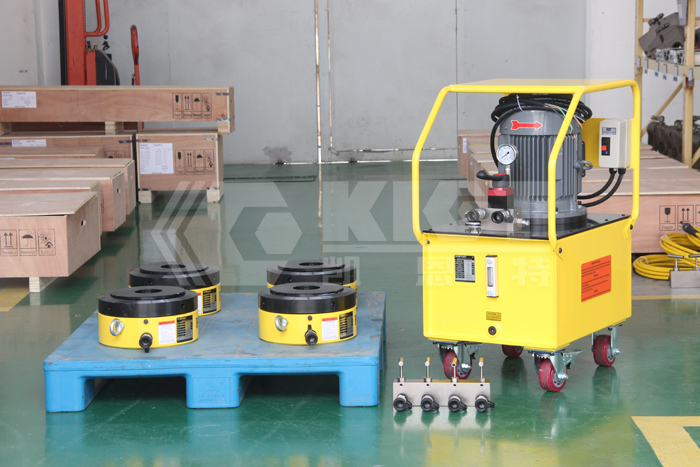
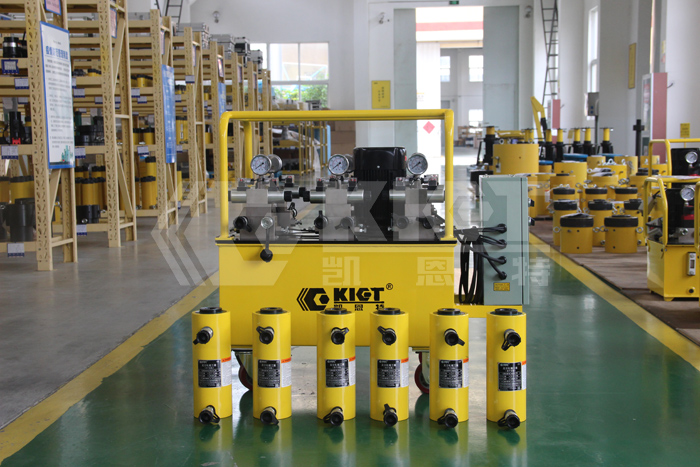
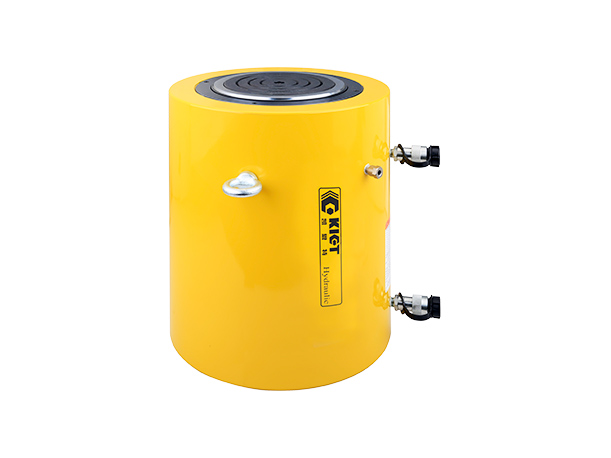
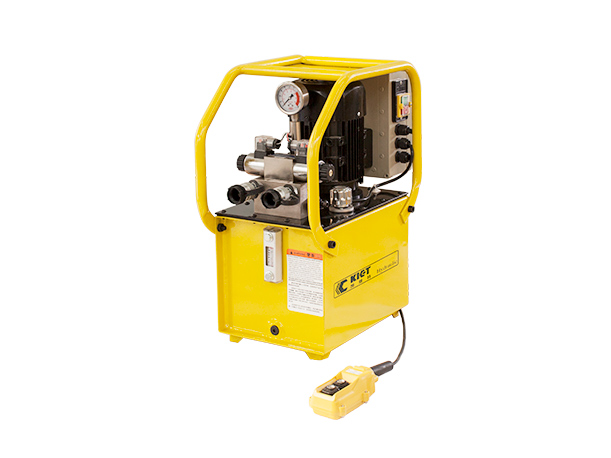
Hydraulic cylinder with electric hydraulic pump is mainly composed of hydraulic cylinders of various specifications, electric hydraulic pump, hydraulic hose, quick coupling, pressure gauge, etc. After the electric pump is connected to the power supply, the motor rotates, causing the hydraulic oil to continuously flow in the hose, thereby driving the operation of the hydraulic cylinder. Compared with the traditional manual pressing work, it is a labor-saving and sustainable working way.
We all know that the electric hydraulic pump is driven by a motor and the size of the motor power is the main factor determining the working efficiency of the cylinder. Therefore, only by choosing an electric pump with sufficient power can make the cylinder work efficiently. However, for small cylinders, high power makes controllability worse. When the oil supply speed increases, we don't have time to react and the piston of the oil cylinder has already been pushed out, which can easily cause the risk of over-stroke. Another factor is the volume of the oil tank of the electric pump. Different hydraulic cylinders require different amounts of oil during one working stage. Therefore, when choosing electric pumps of different specifications, we mainly consider two indicators: motor power and oil tank volume. Next, as a professional manufacturer of hydraulic cylinders, KIET will introduce the parameter specifications of different hydraulic cylinders with electric hydraulic pump based on these two indicators.
First, we analyze the configuration of a single cylinder when it is in operation. If we need a cylinder with a low height (thin type) and a tonnage of less than 250 tons, a 0.75KW power electric pump is sufficient. Because a low local height means a corresponding shorter stroke, the amount of oil required for the piston to fully push out is also less and the oil volume in the 0.75KW electric pump oil tank can meet the demand. As the tonnage of the cylinder increases, the area of the piston rod also increases accordingly, and it is necessary to replace it with a more powerful electric pump. For example, 1.1KW or 2.2KW ones are very common. For cylinders with a capacity of over 500 tons, a 5.5KW electric pump is often sufficient.
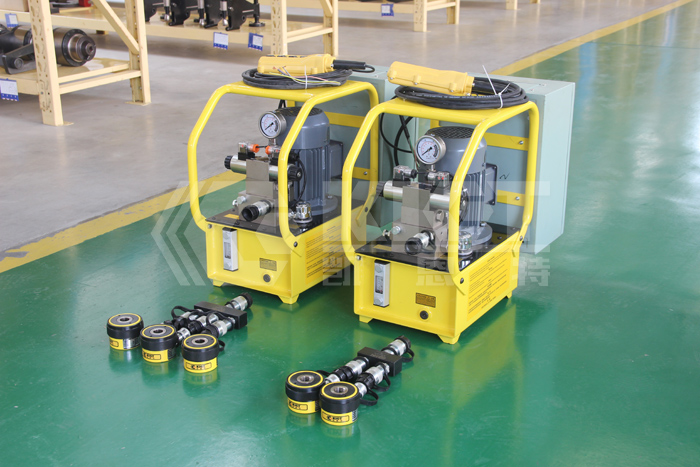
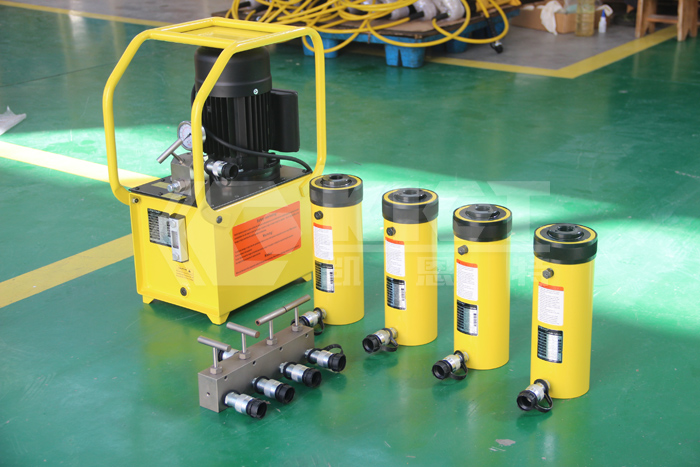
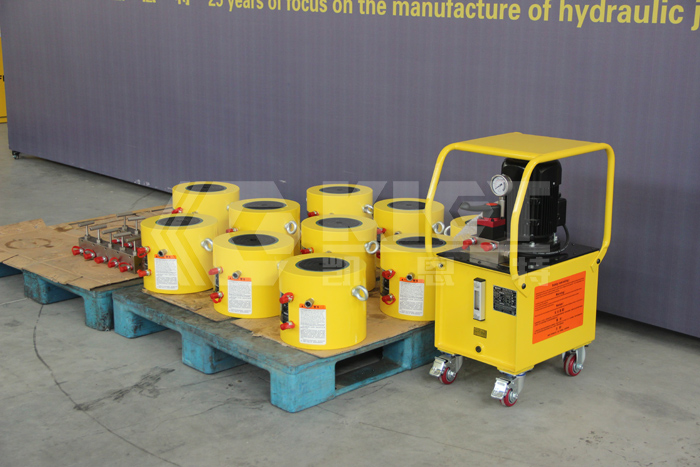
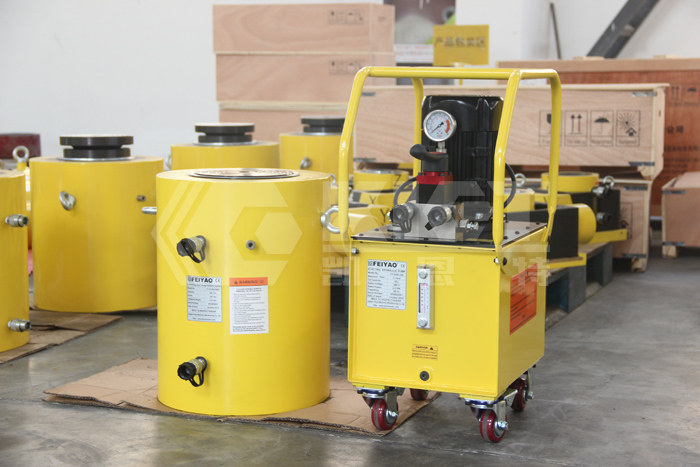
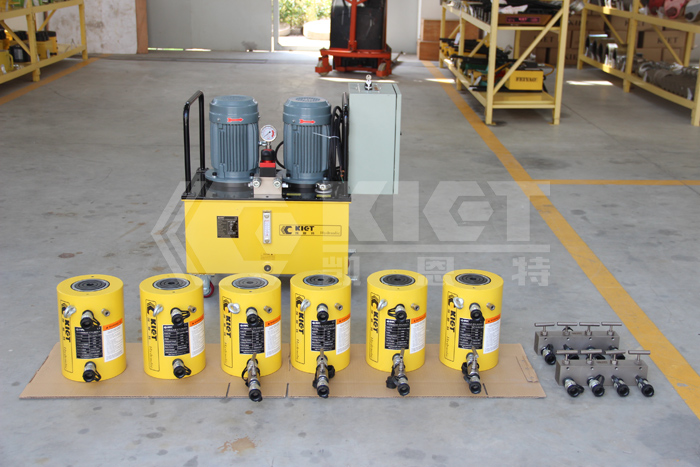
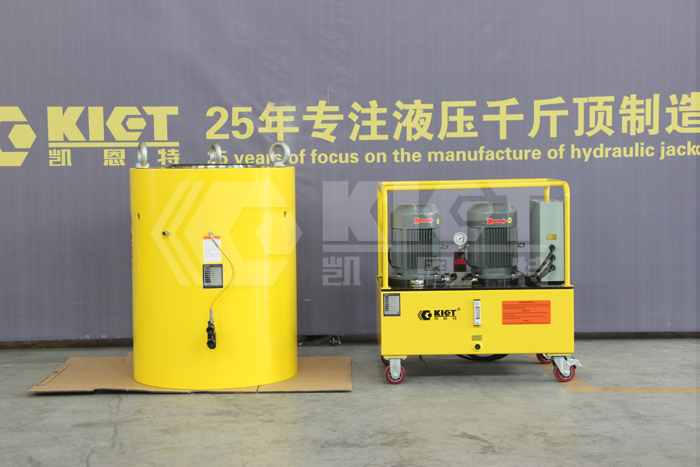
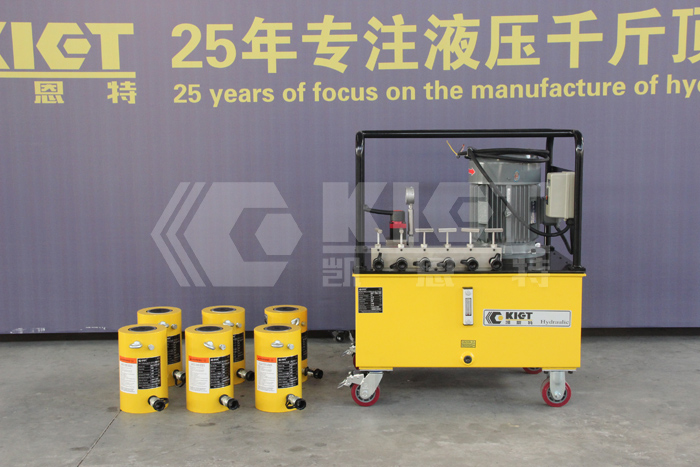
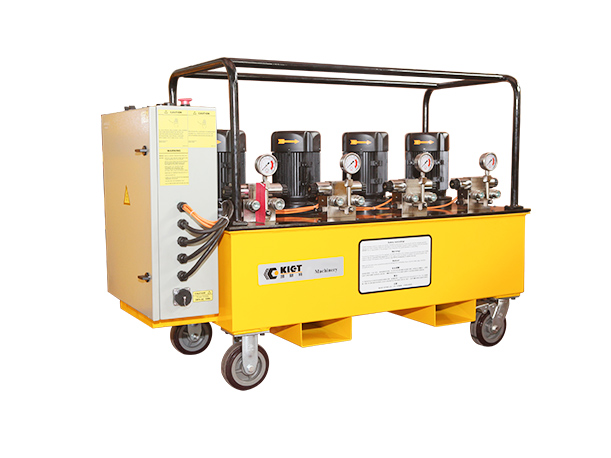
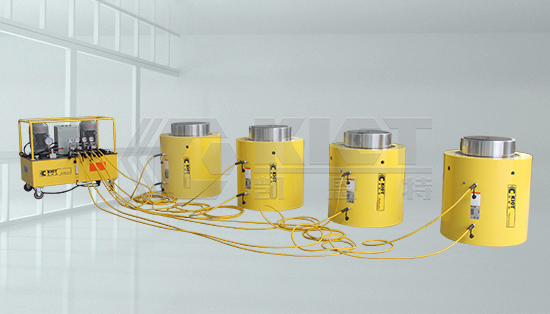
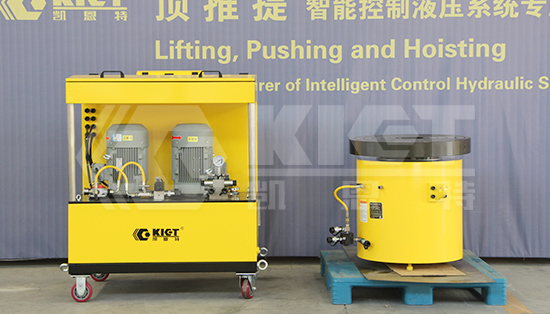
Just now we analyzed the configuration of a single unit. Now let's analyze the situation where multiple cylinders operate synchronously. The synchronous operation of multiple cylinders means that the oil tank originally provided for one cylinder now needs to be provided for multiple cylinders. Moreover, when multiple cylinders are lifted synchronously, the efficiency will be affected. Therefore, at this time, we also need to choose electric hydraulic pumps with greater power and larger oil tank capacity. Unless it is a very small tonnage and a very low stroke cylinder, we can choose a 0.75KW or 1.1KW electric pump. Most of the time, we should select a 2.2KW or 5.5KW electric pump that can meet the power and oil volume requirements. In addition, we can also choose synchronous quantitative pumps specifically designed for the synchronous operation of multiple high tonnage cylinders. These pumps feature a larger oil tank capacity and can be equipped with dual, triple or multiple motors. Below we provide some real shipping photos to help you better understand the configuration of different specifications of hydraulic cylinders with electric hydraulic pumps.