


When the bridge bearings are damaged and aged, we need to replace the bearings. If you want to do a good job, you must first sharpen your tools, and such a PLC-controlled synchronous jacking system for bridge jacking came into being.
PLC synchronous jacking system uses hydraulic drive, pressure and displacement closed-loop automatic control to achieve multi-point control, with high synchronization accuracy, single-point multi-point precise control, data real traceability and other characteristics, widely used in highway bridge maintenance and replacement rubber bearings and overpass lifting, inland bridge lifting, equipment jacking, correction, etc.
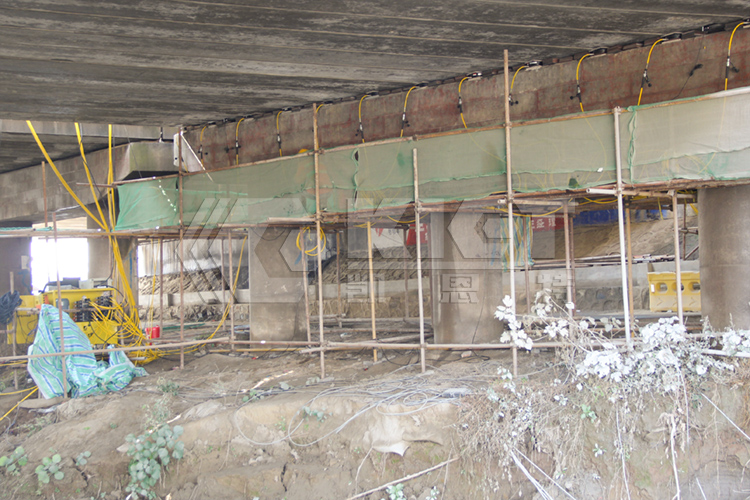
PLC synchronous jacking system replaces rubber bearings
According to the maintenance specifications of highway bridge letters, the branches need to be inspected regularly, and the inspection frequency can be described as once a quarter. When the bearing has obvious defects, such as PTFE plate slipping, rubber aging and cracking, etc., which affect the normal operation of the bearing, it needs to be replaced in time.
Earlier we introduced to you the necessity of rubber bearing replacement and jacking replacement method, here we mainly introduce the PLC synchronous jacking system to replace bridge rubber bearings process.
The PLC synchronous jacking system replaces bridge rubber bearings in 3 main steps:
1. Jack up the bridge superstructure
According to the technical regulations for replacing rubber bearings of highway bridges, even if a bearing is replaced, it is necessary to jack all points horizontally of the bridge synchronously, so as to reduce the additional stress on the bridge structure due to jacking.
Some bridges are built without considering the replacement of the later bearings, and the space is relatively small, and the hydraulic jacks for jacking cannot be arranged, so the pier columns need to be treated at this time. By winding carbon fiber cloth and chiseling away the concrete on the pier roof, the space required for arranging the jack is obtained while ensuring structural safety.
In addition to the hydraulic jack with self-locking function, the PLC synchronous jacking system also includes displacement sensors, pressure valves, hydraulic station control cabinets, and PC terminals. These equipment and instruments are installed on the bridge in turn, and after completing the system commissioning and pre-jacking, the synchronous jacking officially begins. The jacking process should be carried out in stages, the jacking speed of 1 mm per stage shall not be greater than 1 mm every 3 minutes, the jacking difference under the same pier cross bridge shall not exceed 0.1 mm, and the total jacking height should be taken out, and the maximum shall not exceed the design specified value, generally 5 mm.
2. Replace the old rubber bearing
After jacking is in place, check whether the hydraulic jack self-locking device is tightened, and replace the bearing while maintaining oil pressure.
Chisel off the protruding concrete at the bottom of the bearing, lay the rebar mesh and embedded steel plate, pour the underlying stone, install the new bearing, lay the rebar mesh and embedded steel plate, check the headroom height and adjust the pouring air block.
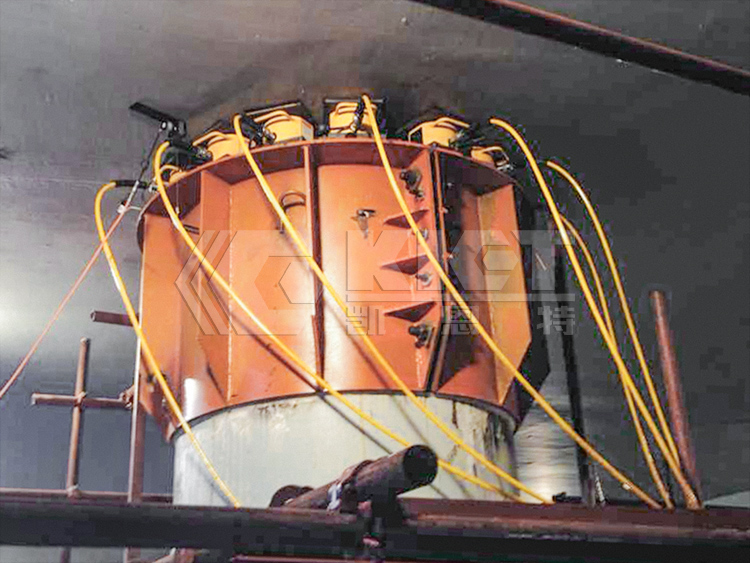
Basin bearing replacement rubber bearing
3. Return the superstructure to its original position
After waiting for the grout or structural glue to be cured to a certain strength, unlock the self-locking hydraulic jack and use the PLC synchronous jacking system to synchronize the falling beam. After the bearing is replaced and the beam body falls on the newly replaced bearing, it should be ensured that the height difference between the horizontal bridge of the same pier to the jacking point is within 0.3 mm, and the height difference between the longitudinal bridge of the adjacent pier to the top is within 1 mm. Finally, the supervising engineer and the owner will conduct quality acceptance, and the three steps of bearing replacement will be completed after passing the acceptance.
Finally, it is concluded that the use of PLC synchronous jacking system to replace bridge rubber bearings is convenient for construction, short construction period, greatly reduces the interference to traffic, and is an indispensable construction tool for bridge maintenance in bridge construction.